
English| EUR
Suggested for you
More currencies
Choose a language
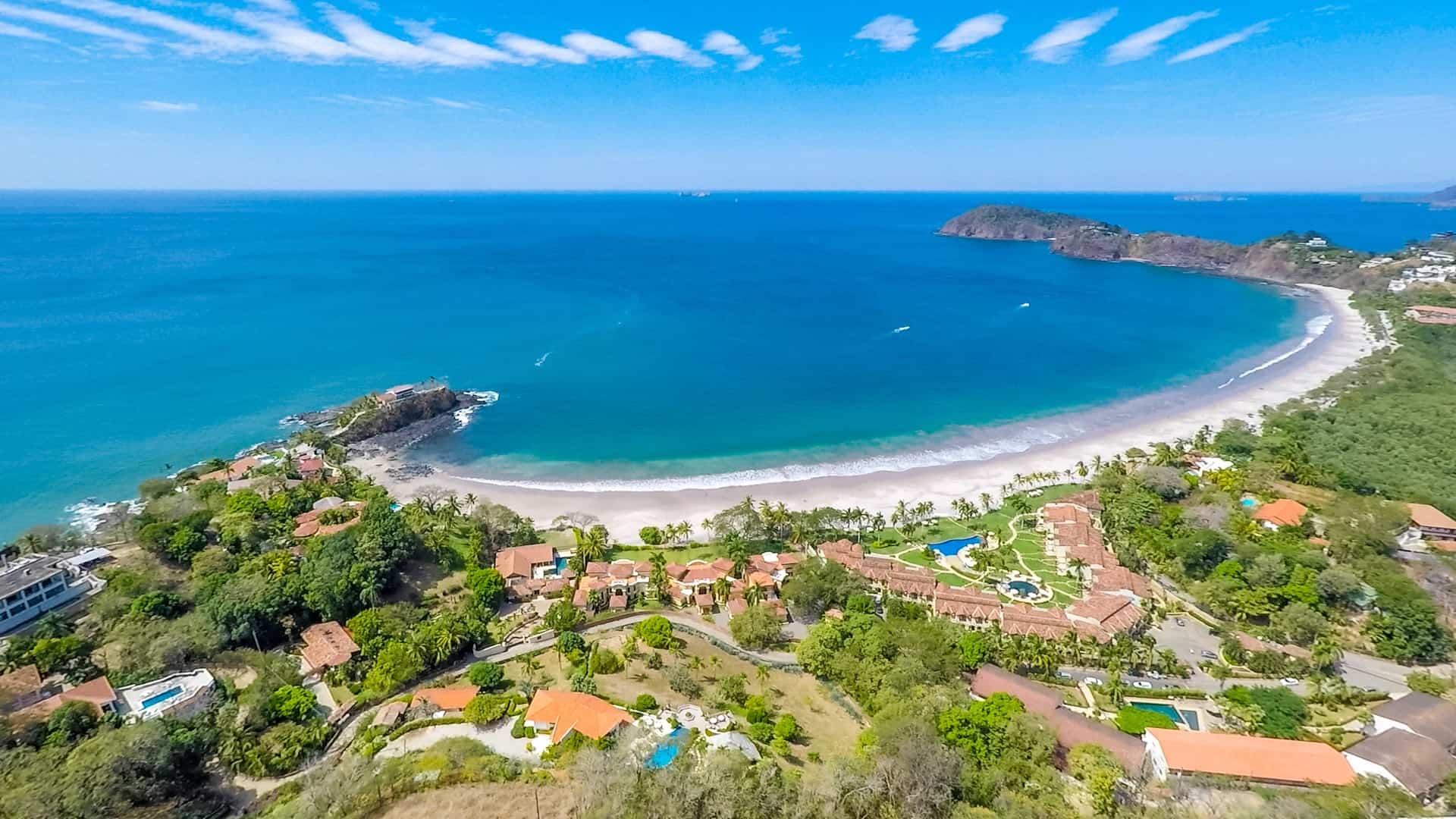
Playa Flamingo sits in Guanacaste's coastal microclimate, where Pacific winds and the latitude deliver two distinct weather windows. This guide breaks down rainfall, temperature, humidity, and surf conditions across both the dry and green seasons so you can pack correctly and time your activities to the forecast.
Quick answer
Playa Flamingo weather divides into a pronounced dry season from mid-December through April—minimal rain, consistent sunshine, daytime highs near 32°C—and a green season from May to November marked by afternoon thunderstorms, higher humidity, and lush surroundings. Ocean temperature holds steady at 27–29°C year-round, and morning hours typically offer calmer winds and flatter water regardless of the month.
Playa Flamingo receives fewer than ten millimeters of rain in February yet more than 300 millimeters in October, a twenty-fold swing that defines the rhythm of the Guanacaste coast. The dry months deliver relentless blue skies and offshore breezes that keep humidity tolerable even as midday temperatures push past thirty degrees. By late March the landscape takes on a golden, parched quality, and the Pacific glows an improbable turquoise under the afternoon sun. The green season arrives in May with punctual drama—morning clarity gives way to towering convective clouds by two or three in the afternoon, then hard, fast downpours that clear within an hour and leave the air soft and cool. Understanding Playa Flamingo's climate means recognizing that rainfall here is not evenly distributed across the day. June through November storms cluster in the late afternoon and evening, which means mornings remain fishable, swimmable, and generally dry. September and October mark the wettest stretch, when multi-day systems occasionally settle in and the roads inland turn slick. December through April, by contrast, can pass without a single cloudy afternoon, and the lack of rain suppresses mosquito populations and keeps trails accessible. Humidity during the dry season hovers around sixty percent near the coast, rising into the eighties once the rains begin. Ocean conditions respond more to swell direction than season. The northwest swells of December and January bring bigger sets and draw surfers to nearby breaks, while the calmer months of February and March see glassier mornings ideal for paddleboarding and snorkeling. Water clarity peaks in the dry season when runoff ceases, though visibility remains acceptable year-round beyond the immediate shoreline. Sunrise arrives near five-thirty throughout the year, and the golden hour before dusk stretches longest in June and July when the sun sets after six. Gusts pick up in the early afternoon regardless of month, a predictable thermal pattern driven by the temperature differential between land and sea. Knowing the weather patterns lets you structure your day around them rather than against them. Early departures capture the best light and calmest water. Afternoon shade becomes essential from late morning onward during the dry months, while the green season rewards patience—wait out the three o'clock squall and you inherit an empty beach under clearing skies. The climate here is not subtle, but it is reliable, and that reliability turns weather from obstacle into opportunity.
“Playa Flamingo receives fewer than ten millimeters of rain in February yet more than 300 millimeters in October, a twenty-fold swing that defines the rhythm of the Guanacaste coast.”
The dry season, spanning from December to April, offers consistent sunshine and minimal rainfall, making it the most reliable period for outdoor activities. Travelers seeking a balance between comfortable weather and fewer visitors may also consider the transitional months of May and November.
Sunny, 30°C–33°C. Low humidity with reliable clear skies.
Expect consistent warmth and low chance of precipitation.
Humid, 28°C–31°C. Periodic afternoon rain showers.
Vegetation is lush and temperatures remain warm despite rainfall.
—
Prioritize the best arrival window of 07:00–10:00 to enjoy calmer waters and avoid peak midday heat.
Verdict: The best time to visit is during the dry season months of February and March for stable weather, arriving between 07:00 and 10:00 on weekdays to avoid peak crowds.
Playa Flamingo is a public beach accessible at all hours throughout the week. Monitoring local weather patterns helps determine the most comfortable times for visiting the shoreline.
Playa Flamingo is located in the Santa Cruz canton of Guanacaste Province. The most reliable approach for visitors is via Route 155, which connects to the coast from the larger regional road network.
Route 180 and Route 155 via Liberia
Alfaro bus line from San Jose to Flamingo
Private shuttle from Daniel Oduber Quirós International Airport (LIR)
Plan your travel within the best arrival window of 07:00–10:00 to avoid peak midday heat and enjoy calmer morning waters. During the rainy season, prioritize travel via main paved roads to ensure accessibility.
Guanacaste's tropical climate demands specific preparation to stay comfortable and protected throughout your visit.
Everything you need to know about playa flamingo weather
You can monitor playa flamingo weather throughout the year, as the region enjoys a tropical climate with distinct wet and dry seasons. Planning your visit during the dry season typically offers the most consistent sunshine for outdoor activities.
Inclement playa flamingo weather may occasionally influence ocean conditions, potentially impacting catamaran tour schedules. Operators prioritize safety and will communicate any necessary adjustments based on real-time maritime forecasts.
Access to the public beach is entirely free, meaning there is no entrance fee for visitors to enjoy the coastline. You can enjoy the sand and surf without needing a ticket or payment.
The best arrival window is between 07:00 and 10:00 to avoid the peak midday heat and enjoy calmer morning waters. Arriving early also helps secure a comfortable spot on the sand before the area becomes busier.
The beach is open daily from 00:00 to 23:59, providing full access for travelers to explore the shoreline at their convenience. This schedule allows for both sunrise strolls and evening relaxation by the Pacific.
When experiencing the Guanacaste climate, it is helpful to remain hydrated and use sun protection, as the tropical sun is intense. Adapting your activities to follow local playa flamingo weather patterns ensures a more comfortable experience.
Coastal conditions such as tides and swells can fluctuate, so it is wise to observe local warning signs if you plan on swimming. These natural variations are part of the broader Guanacaste environment and define the regional ecosystem.